VULNIX0 / CASE FILEMODULE 12 — THREAT INTELLIGENCE VALIDATION
MODULE 12 OF 16
Threat Intelligence Validation
A passing vulnerability scan says nothing about whether your infrastructure already has a reputation problem. Vulnix0 cross-references every domain, IP, and file hash you own against live threat-intelligence feeds, so a compromise nobody noticed internally doesn't stay invisible.
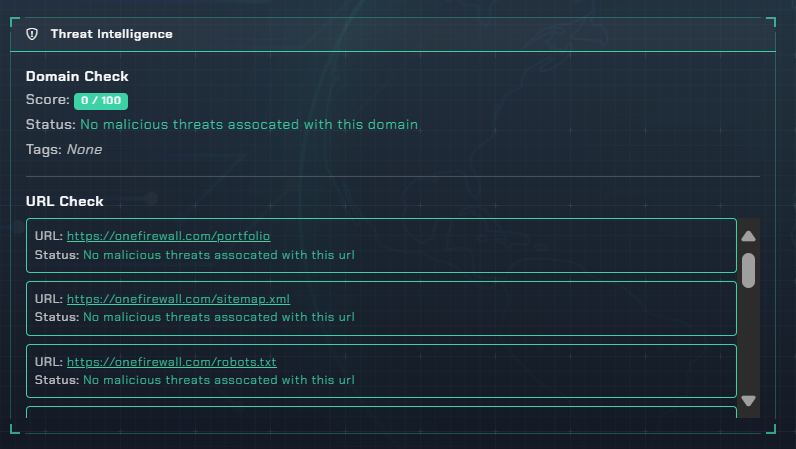
Exhibit — Threat Intelligence Validation output, Vulnix0 dashboard
What We Check
Module 12 — checklist
✓Domain and IP reputation checks against threat-intel feeds
✓File-hash reputation lookups for discovered downloadable assets
✓URL reputation scanning across crawled links
✓Malware, botnet, and phishing-association correlation
✓Historical compromise indicators tied to your infrastructure
✓Continuous re-validation as threat feeds update
VULNIX0 / CASE FILECLOSE
Close the File

Find out what an attacker would find. Today.
Request access, or talk to the team behind Vulnix0.
The first project out of Velocity Lab — OneFirewall Alliance's R&D team — built with AquilaX Security. AI-driven offensive security, from discovery to continuous exploit validation.