VULNIX0 / CASE FILEMODULE 06 — DATA LEAKAGE DETECTION
MODULE 06 OF 16
Data Leakage Detection
Most damaging leaks are not dramatic. A stray .env file committed two deploys ago, a verbose stack trace returned on a 500, an internal hostname sitting in an HTML comment — Vulnix0 finds the ones your team forgot were ever exposed, and checks whether they have already surfaced on a paste site or the dark web.
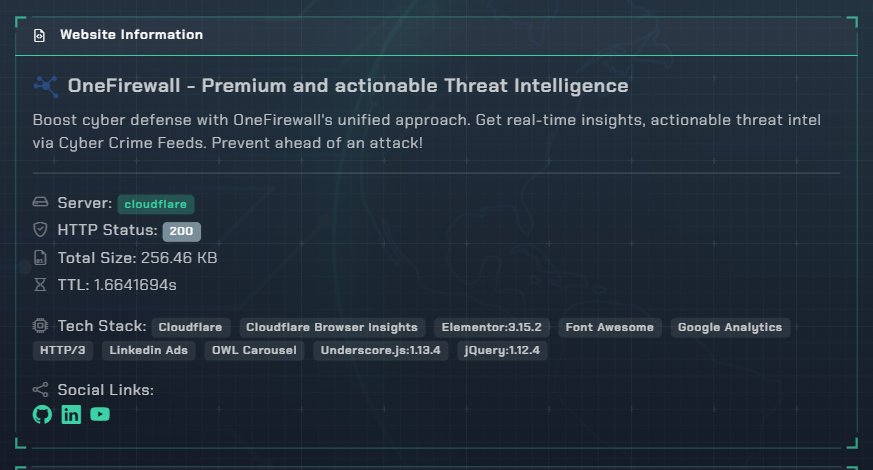
Exhibit — Data Leakage Detection output, Vulnix0 dashboard
What We Check
Module 06 — checklist
✓Exposed .env, .git/config, and backup-file detection
✓Verbose error and stack-trace disclosure analysis
✓Internal hostname and IP leakage in responses and comments
✓Technology and server-version banner exposure
✓Hardcoded secret and credential pattern matching
✓Dark-web and paste-site monitoring for leaked credentials tied to your domain
VULNIX0 / CASE FILECLOSE
Close the File

Find out what an attacker would find. Today.
Request access, or talk to the team behind Vulnix0.
The first project out of Velocity Lab — OneFirewall Alliance's R&D team — built with AquilaX Security. AI-driven offensive security, from discovery to continuous exploit validation.